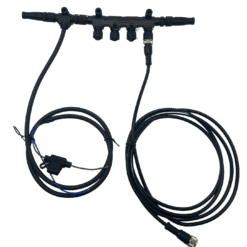


NMEA 2000 N2K Starter Kit
$95.00
The NMEA 2000 N2K Starter Kit includes Backbone with accessories and will provide a complete NMEA 2000 data and power network to all your NMEA 2000 marine electronic devices.
In stock (can be backordered)
Description
Kickstart your marine electronics integration with the Quark-Elec NMEA 2000 N2K Starter Kit, a thoughtfully curated bundle that provides everything you need to build your first NMEA 2000® network on board. Perfect for boaters and installers alike, this kit delivers both data communications and power distribution to multiple NMEA 2000 devices such as chartplotters, sensors and displays.
Key Features
-
Complete backbone solution: Includes a 6-port main backbone trunk that supports network power and data distribution.
-
Power & drop components: Comes with a power-tap T-splitter and a 2 m drop cable to connect your first device easily.
-
Network termination included: A pair of male and female NMEA 2000 terminators is provided to properly finish the backbone ends and ensure reliable communication.
-
Plug-and-play simplicity: Designed to save time and effort — the kit’s components click together quickly with screw-locking connectors, so you can start adding devices without complicated wiring.
What is the difference between NMEA 0183 and NMEA 2000 (N2K)?
NMEA 0183 is a serial data interface operating at 4.8 Kbit/second utilizing standard asynchronous communications.
NMEA 2000is a low-cost serial data network operating at 250 Kbit/second utilizing the Controller Area Network (CAN). The CAN bus was originally developed for the automotive industry but is now used in numerous industrial applications.
The key difference, apart from the obvious one of operating speed, is that NMEA 0183 is an interface while NMEA 2000 is a network, the NMEA2000 network allows for 2 way data traffic.
The NMEA 2000 network allows multiple Electronic devices to be connected together on a common channel for the purpose of easily sharing information. Because it is a network, and because multiple devices can transmit data, a more comprehensive set of rules is required that dictate the behaviour of the members of the network. The CAN automatically provides some of these rules – mostly for control of access to the network, packet transmission, and for error detection.
Similar to NMEA 0183, NMEA 2000 defines standard data formats and definitions, but in addition provides more extensive network management rules for identifying nodes on the network, sending commands to devices, and for requesting data. Besides the greater amount of control and integration provided, NMEA 2000 replaces with a single cable the wiring of up to 50 NMEA 0183 interconnections and can handle the data content of 50-100 NMEA 0183 data streams.
| Document Type | Link |
|---|---|
| User Manual |  |
Building an N2K Network
This Starter Kit includes:
- 1 x AS2K-B NMEA2000 Backbone
- 1 x AS2K-T NMEA2000 Backbone Terminator Set (Male and Female)
- 1 x AS2K-P Power-Tap T-Splitter Cable
- 1 x AS2K-C NMEA 2000 Drop Cable (2m)
NMEA 2000 (aka.N2K) is a plug-and-play communications standard used for connecting marine electronics including sensors and display devices. The NMEA 2000 protocol increases the speed and functionality while significantly reducing the wiring and expertise needed for marine electronics setup on boats and ships.
The 6 port NMEA trunk allows for connection to 2 terminators, and 4 other connections (12.0V power and networking for 3 pieces of NMEA 2000 equipment.)