

MPPT Devices for Marine: What They Are, How They Work, and Why You Need One
Feb
Modern vessels rely more than ever on onboard electrical systems. From navigation electronics and lighting to refrigeration and communication equipment, dependable power is essential. Solar power has become a popular solution for keeping batteries charged while at sea or at anchor, and at the heart of an efficient marine solar system is the MPPT device.
This article explains what an MPPT is, why it’s important, and the key benefits of using one. Whether you have a small sailing boat or a large yacht, an MPPT is a vital addition to your vessel.
What Is an MPPT Solar Charge Controller?
MPPT stands for Maximum Power Point Tracking. An MPPT device is a type of solar charge controller that sits between your solar panels and your battery bank. Its job is to extract the maximum possible power from your solar panels and convert it into the most efficient charging voltage for your batteries.
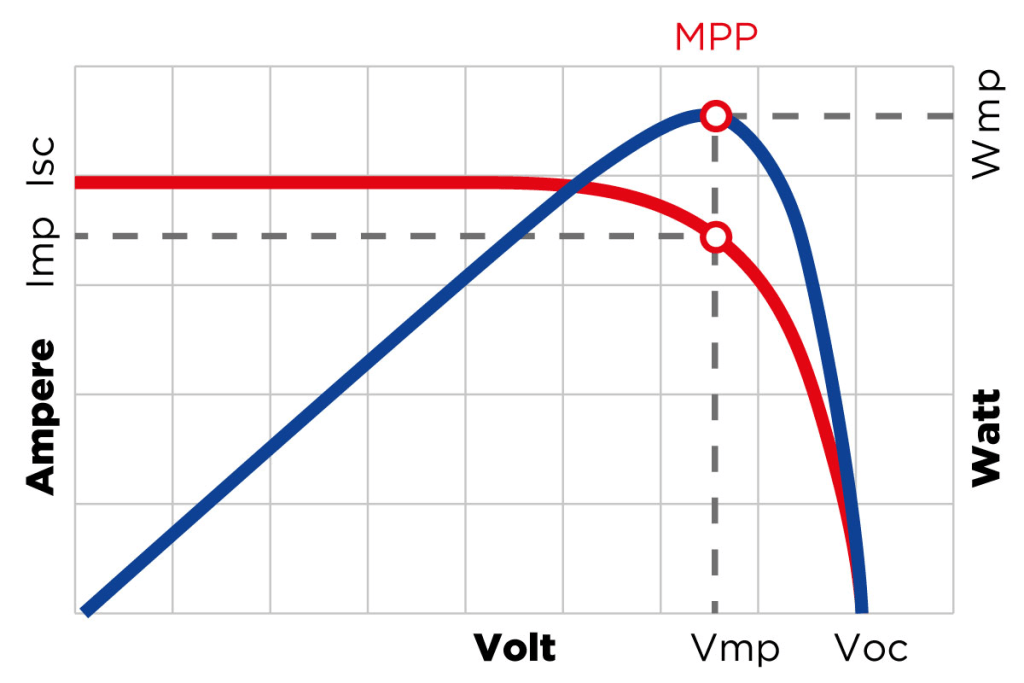
Solar panels rarely operate at a constant voltage. Their output changes throughout the day depending on sunlight intensity, temperature, shading, and panel angle. An MPPT continuously tracks the panel’s optimal operating point, referred to as the maximum power point (MPP) and adjusts its input to ensure the highest possible energy harvest at any given moment.
How Does an MPPT Work?
An MPPT solar charge controller works by constantly monitoring the voltage and current coming from the solar panels and calculating the point at which the panels produce the maximum power. It then converts this power to the correct voltage required by the boat’s battery bank while increasing the available charging current.
For example, a solar panel might produce 36 volts, while your marine battery system operates at 12 or 24 volts. Instead of wasting the extra voltage, the MPPT efficiently steps it down and converts it into additional charging current. This process happens continuously and automatically, allowing the MPPT to adapt to changing sunlight conditions and keep your batteries charging as efficiently as possible, even when the vessel is moving or partially shaded.
In simple terms, an MPPT makes sure you get the most usable energy from your solar panels, even when conditions are far from perfect.
Why Do Boats Need an MPPT Solar Controller?
Boats present unique challenges when it comes to power generation:
- Limited space for solar panels
- Variable sunlight due to movement, weather, and shading from rigging or superstructures
- High reliance on batteries when away from shore power
Because deck space is limited, every watt of solar energy counts. An MPPT ensures that your solar system operates at peak efficiency, helping keep batteries charged without relying on engines or generators.
Additionally, marine battery systems often operate at 12V, 24V, or even 48V, while solar panels may produce much higher voltages. An MPPT efficiently converts this higher panel voltage into the correct battery charging voltage without wasting energy.
Benefits of Using an MPPT for Marine Solar Power
Increased Charging Efficiency
One of the biggest advantages of an MPPT is improved efficiency. Compared to basic charge controllers, MPPT devices can deliver up to 20–30% more usable power, especially in cooler conditions or low-light environments. This means faster battery charging and better performance throughout the day.
Better Performance in Changing Conditions
Marine environments are constantly changing. Cloud cover, shading from sails or antennas, and shifting sun angles all affect solar output. An MPPT adapts in real time, continuously optimizing power transfer even when conditions are not ideal.
Improved Battery Health and Longevity
MPPT controllers provide more accurate and stable charging profiles. By delivering the correct voltage and current for each stage of battery charging, they help prevent overcharging or undercharging. This leads to longer battery life and more reliable onboard power.
Support for Higher-Voltage Solar Panels
An MPPT allows the use of higher-voltage solar panels or multiple panels wired in series. This can reduce cable losses, allow for longer cable runs, and provide more flexible system design, an important advantage on larger boats or yachts.
Reduced Engine and Generator Use
By maximizing solar energy harvest, an MPPT reduces the need to run engines or generators just to charge batteries. This saves fuel, lowers maintenance costs, reduces noise, and improves overall comfort onboard.
Greater Energy Independence
For cruisers, liveaboards, and offshore sailors, energy independence is key. An MPPT helps ensure that your solar system delivers the maximum possible output, allowing you to stay at anchor longer without worrying about power shortages.
Introducing our IBC75-15 Intelligent Battery Controller
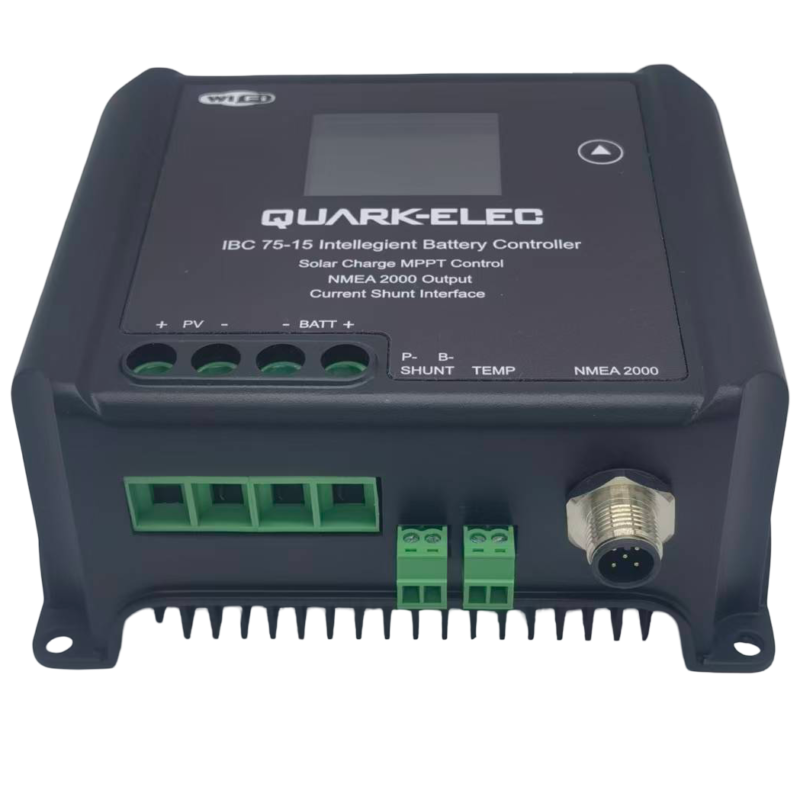
While any MPPT can improve solar charging efficiency, not all MPPT controllers are created equal. Our IBC75-15 Intelligent Battery Controller is a compact and versatile MPPT solar charge controller specifically designed for marine and mobile power systems. It combines high-efficiency solar charging with advanced battery monitoring and seamless system integration, making it an ideal solution for boats and yachts where reliable power management is essential.
The IBC75-15 supports a wide range of battery types and is engineered to maximise energy harvest while giving users clear visibility of battery status and onboard power consumption critical factors when operating away from shore power.
How Artificial Intelligence Enhanced MPPT Improves Solar Performance
Unlike conventional MPPT solar charge controllers, the IBC75-15 incorporates AI-enhanced MPPT algorithms that go beyond standard methods. Traditional MPPT controllers typically react only to instantaneous voltage and current changes. In contrast, the IBC75-15 analyses real-time solar input data while also learning by integrating Reinforcement Learning (RL), we create an adaptive controller that learns optimal tracking strategies from historical operating patterns over time.
By combining live data with learned behaviour, the controller adapts its strategy to the local sunlight conditions, weather patterns and installation characteristics. This allows the IBC75-15 to respond more effectively to rapidly changing marine conditions such as intermittent cloud cover, boat movement, and partial shading from rigging or superstructures.
Crucially, the AI-enhanced approach improves the controller’s ability to identify the true global maximum power point during partial shading, rather than settling for a lower local peak. The result is sustained optimal charging performance, increased energy harvest, and more usable power delivered to the battery bank throughout the day.
Advanced Battery Monitoring and Protection
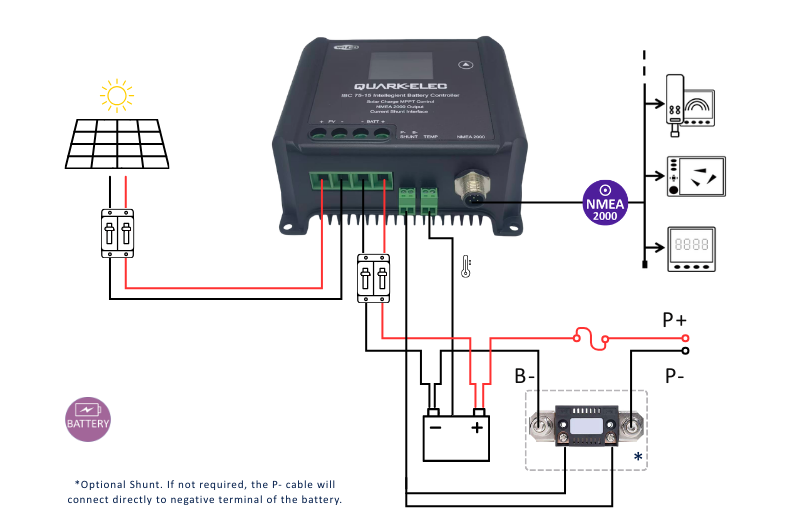
In addition to efficient charging, the IBC75-15 provides comprehensive battery monitoring, helping to extend battery life and improve system reliability. The battery’s temperature is measured using an external RTD sensor connected to the battery negative terminal, enabling more accurate charge control and enhanced protection against temperature-related damage.
When used with a standard external shunt (compatible with most commonly available shunt types) the IBC75-15 can also monitor real-time battery load current. This gives boat owners clear insight into their onboard power consumption, an essential capability for managing energy usage while cruising or at anchor.
Smart Integration and User-Friendly Monitoring
Designed for modern marine systems, the IBC75-15 offers multiple ways to access system information. A built-in mini display provides a quick overview of real-time battery and system status. For more detailed insights, users can access the integrated web interface via Wi‑Fi, allowing monitoring from a smartphone, tablet, or computer.
The controller also transmits key battery data including voltage, load current, state of charge (SOC), and temperature directly to the NMEA 2000 network. This enables battery information to be displayed on compatible chart plotters and onboard instruments. Users can also configure alarm thresholds, such as minimum battery voltage or maximum allowable temperature, directly through their instruments, helping ensure the battery system operates safely and within recommended limits.
Conclusion: Why an MPPT Is Essential for Marine Solar Systems
An MPPT is a critical component of any efficient marine solar power system. By maximizing solar panel output, improving battery charging, and adapting to constantly changing conditions, MPPT devices help boat owners get the most out of their onboard energy systems.
Whether you’re a weekend sailor or a full-time cruiser, investing in an MPPT can lead to better performance, longer battery life, and a more reliable power supply, making time on the water more enjoyable and stress-free.
